
- Home
- Programmes
- Indoor residual spraying
Our flagship programme
Indoor residual spraying
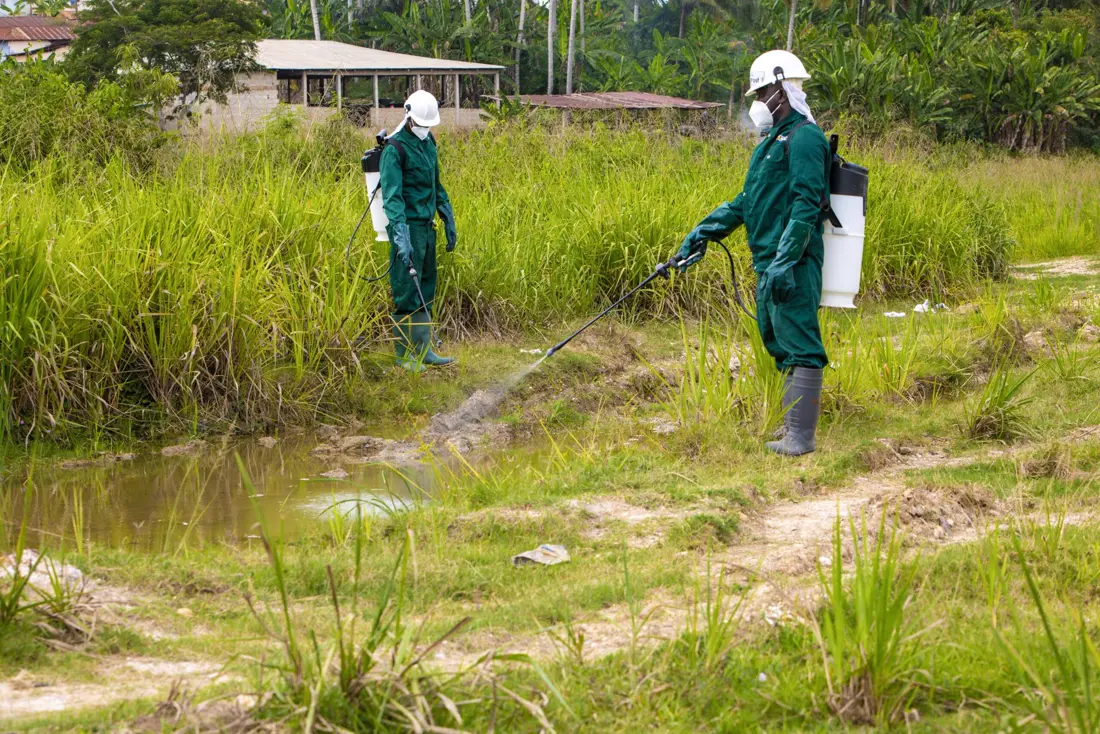
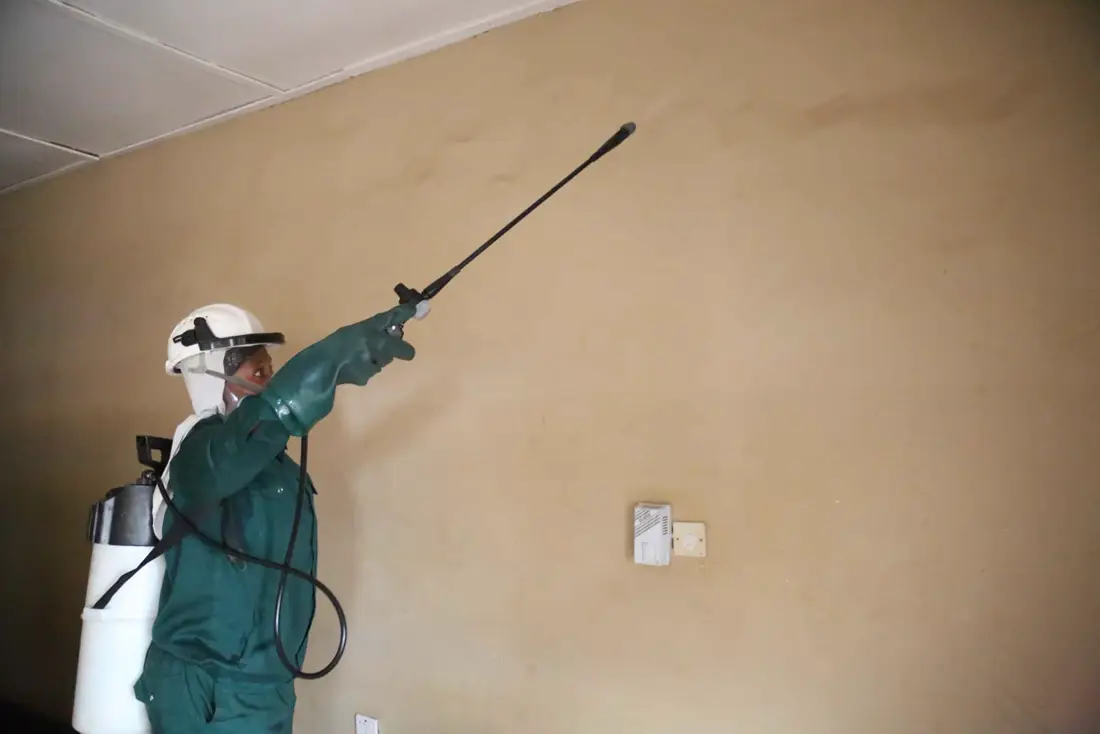
Most malaria mosquitoes rest on indoor walls after they feed. Coating those walls with a long-lasting insecticide kills them for several months, before they can bite again.
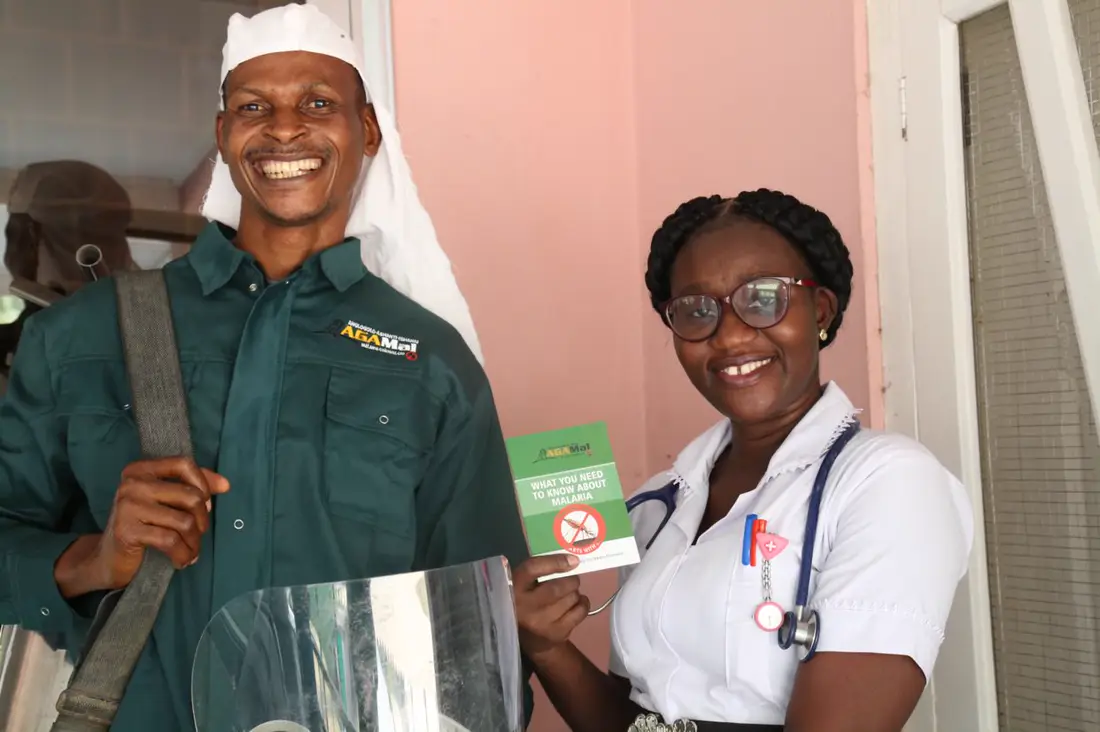
- people protected by the 2025 campaign
- 1.45M+
- households sprayed in 2025
- 247K+
- structures sprayed in 2025
- 157K+
- rooms sprayed in 2025
- 1.6M+
2025 campaign: 11 weeks, 7 April to 20 June 2025, across 16 districts and municipalities in the Upper East, Upper West and Ashanti regions. Households (247,216), structures (157,962 of 160,854 targeted, 98.2%) and rooms (1,622,067) are as reported in the Ntontom Bulletin, 23rd edition.
Why it works
A proven tool since the global eradication campaign
Indoor residual spraying was the main malaria control method of the Global Malaria Eradication Campaign of 1955 to 1969, which eliminated malaria from several areas and sharply reduced it in others.
Today large-scale prevention rests on two vector control tools: IRS and insecticide-treated nets. Randomised comparisons confirm that IRS reduces malaria incidence.
The campaign
How a spray season runs
Each season starts with notifying communities and recruiting staff, and ends with a review of what to improve next time.
-
Before spraying
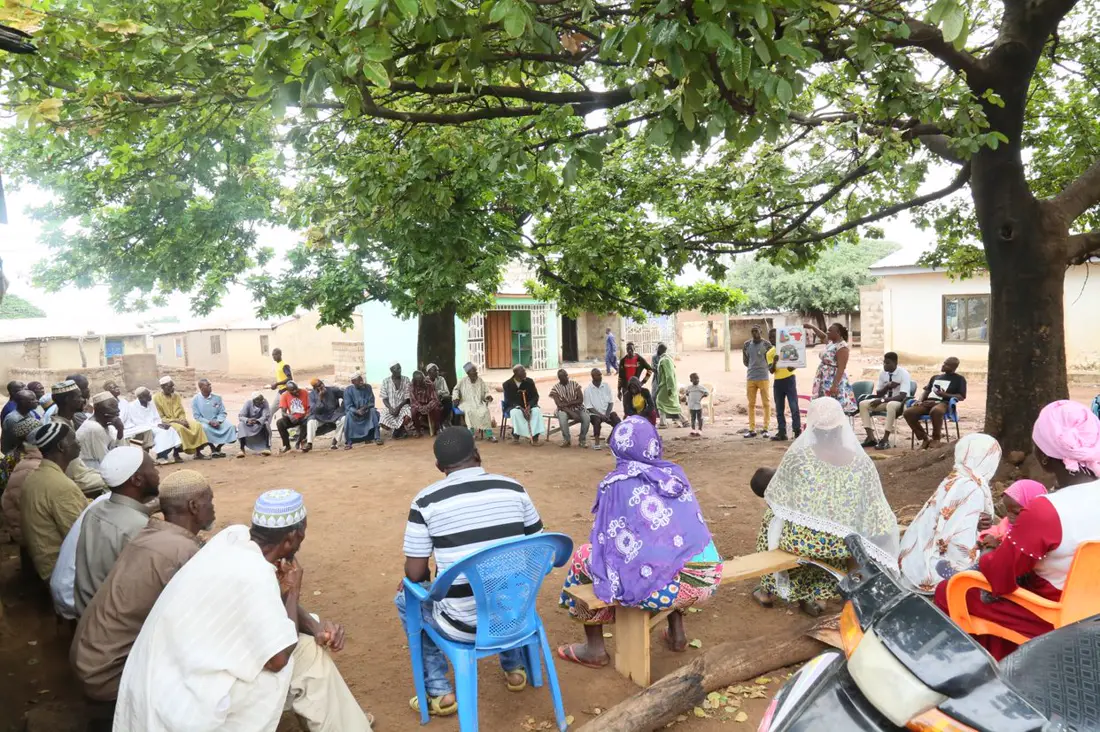
Social and behaviour change communication (SBCC) prepares communities and answers concerns from previous seasons.
- Community entry with chiefs, religious leaders and the District Chief Executive
- Recruitment and training of all operational staff
- Radio jingles, panel discussions, gong-gong and public-address announcements
- Communities are prepared at least three days before spraying
-
House to house
Spray operators show their ID, inspect the rooms with the householder, and explain every step before spraying.
- Householders stay outside for at least two hours after spraying
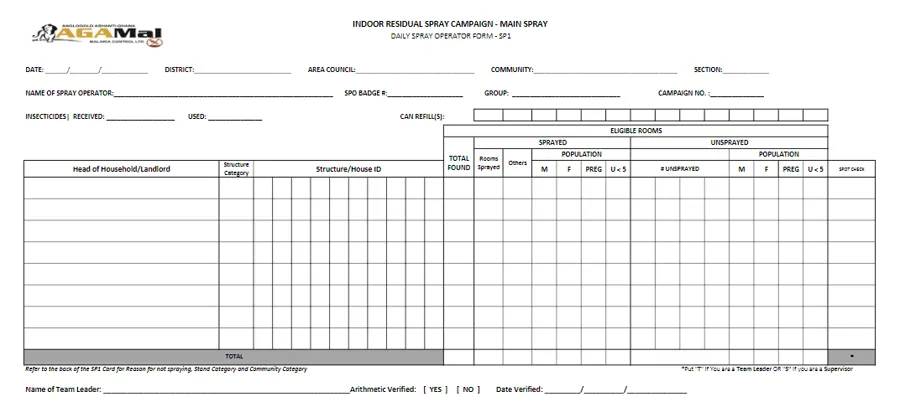
- Every house is recorded on an SP1 card
- Operators return at the end of the day for a final inspection and the householder’s signature
-
After spraying
District teams and stakeholders review the season and plan improvements.
- Debriefing for district teams
- District and regional stakeholder review meetings
- Community exit, and equipment returned to the warehouse
Quality and evidence
Supervised, measured and tested in the lab
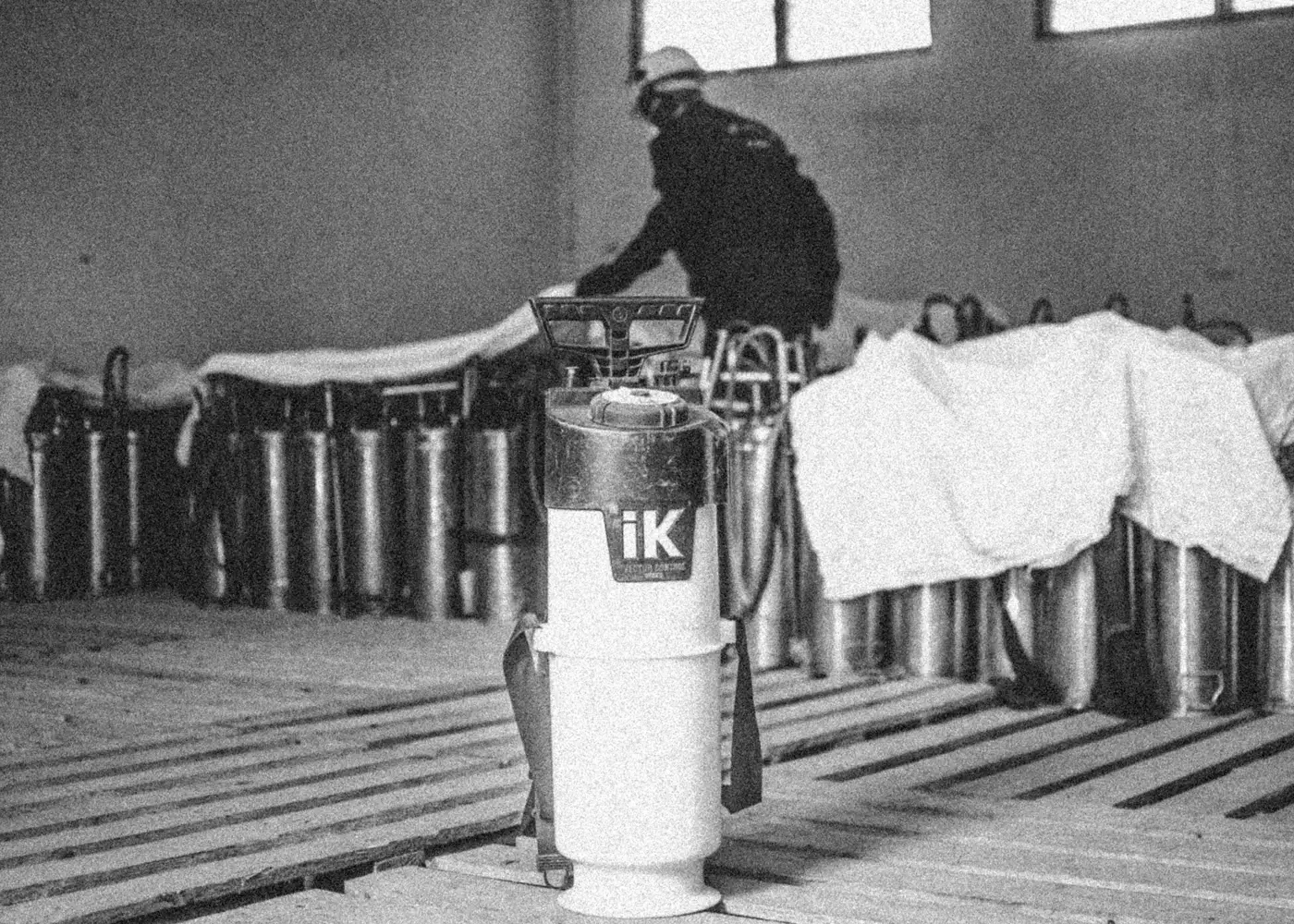
Supervision. District M&E and IRS teams check nozzle discharge rates, pump condition, insecticide mixing, technique, speed and coverage against standard operating procedures.
Data management. All IRS data is collected, validated and stored so decisions can be made quickly and progress tracked against targets.
Entomology. Our molecular laboratory identifies Anopheles gambiae sibling species, detects kdr and Ace-1 resistance mutations and runs ELISAs for sporozoite infection.
Common questions
Questions about indoor residual spraying
Straight answers for households, communities and partners. Can’t find yours? Contact us.
Adapted from AGAMal’s briefing “Frequently asked questions about IRS” (2023), with details from this site and the sources linked in the answers.
Malaria and who is at risk
Does the start of the rainy season bring malaria?
It raises the risk. The rains create more breeding sites for the Anopheles mosquito near homes. More mosquitoes means more bites, and possibly more people infected.
Who is at risk of malaria?
Everyone who lives where malaria is common is at risk. Pregnant women and children under five are the most vulnerable.
How does spraying reduce malaria?
The insecticide shortens the life of the female Anopheles mosquito, so she dies before she can pass the malaria parasite from one person to another. It also cuts short her life cycle, so the mosquito population falls.
Why we spray the way we do
Why do you spray inside homes and not outdoors?
The female Anopheles prefers to bite people, bites indoors, bites mainly at dawn and dusk, and rests on a solid surface indoors afterwards. Walls are where she picks up the insecticide.
Why don’t you spray hen coops, animal pens and storerooms?
The mosquitoes that spread malaria prefer to feed on people. Feeding on animals does not spread malaria, so spraying animal shelters would not reduce it.
After spraying, we still see mosquitoes in our rooms. Why?
Spraying does not make a barrier, and it does not kill mosquitoes on contact. A mosquito has to land on the wall and pick up the insecticide, so it can take a little while for it to die. You may still see some mosquitoes in the days after spraying.
I already use an aerosol spray. Why do I still need indoor residual spraying?
- It is free.
- It lasts much longer, because the insecticide stays on the walls and keeps working for months.
- Trained operators do the spraying while you wait outside, so there is little risk of breathing it in.
- You do not have to remember to spray every night.
Spray day
Does it cost anything?
No. Spraying is free to residents. The 2025 campaign ran for 11 weeks, from 7 April to 20 June, across 16 districts, with funding from the Global Fund (GBC Ghana, April 2025).
What happens when the spray team comes to my house?
The operator introduces themselves and shows an identification card. With your permission, the operator and you inspect the rooms to be sprayed. The operator mixes the insecticide and explains each step, then asks you to stand at a safe distance while the rooms are sprayed. At the end of the day the operator comes back for a final inspection, and you sign the household card to confirm you are satisfied with the work.
How long must we stay out of the house?
Stay outside for at least two hours after spraying. Communities chosen for spraying are told at least three days in advance so households can prepare.
Can rooms where a newborn sleeps be sprayed?
Yes. The insecticide left on the walls is not harmful to newborns, and newborn babies are among the most vulnerable to malaria, so protecting their rooms matters.
For partners and donors
Why do you change the insecticide used for spraying?
Insecticides are rotated over time so that local mosquitoes do not develop resistance to them. AGAMal’s entomology laboratory supports this by testing insecticide resistance, checking how well the insecticide works on sprayed surfaces, and screening for resistance mutations (kdr and Ace-1). In 2016 the Next Generation IRS (NgenIRS) initiative from IVCC, funded by Unitaid, widened the use of newer insecticides.
How do you know spraying is done properly?
District monitoring and evaluation teams supervise spraying. They check nozzle discharge rates, pump condition, insecticide mixing, spraying technique, speed and coverage against standard operating procedures, and every sprayed house is recorded on an SP1 card. In the 2025 campaign, teams sprayed 157,962 of 160,854 targeted structures (98.2%) and reached 100% of the target population of 1,450,136 people (Ntontom Bulletin, 23rd edition).
What results has the programme had?
In Obuasi, malaria prevalence among schoolchildren has fallen from 46% in 2006 to 0.9%, which local health leaders credit largely to indoor residual spraying (Ghana News Agency, April 2026).
More programmes
Working alongside spraying

Help us reach malaria-free communities
Volunteer in your community, partner with us on a programme, or see our open position.